
Matrimonial law

Constitutional Law, family law, Matrimonial law

Supreme Court Guidelines regarding the Interim Maintenance Petitions under different Legislations in the matter of RAJNEESH v/s NEHA SC/0833/2020

In the last of 2020 in matter Rajneesh v/s NEHA SC/0833/2020, The judgment delivered by the Hon’ble supreme court regarding interim maintenance under the various provision of different laws relating to family law. In Rajneesh v/s NEHA SC/0833/2020, the supreme court formulated the guidelines relating to various issues faced by the family or magisterial court while ordering interim maintenance. However, guidelines issued by the supreme court is not so exhaustive in selective circumstances of the case where it appears before the court to dispense the order is must necessary. In this case the supreme court defined the scope or functions of provisions relating to maintenance. As well as summed up the dozens of previous case judgments to formulate guidelines. Generally while granting interim maintenance or final maintenance several issues are faced by the family or magisterial courts like Payment of interim maintenance, Issue of Overlapping Jurisdictions under different maintenance provision under a different statute, Criteria for determining the quantum of maintenance, Date from which Maintenance to be awarded and Enforcement of orders of maintenance. The various opinion of the high court made the functioning of provisions critical. Facts of the case…Criminal appeal filed  by the applicant husband Against the interim order of a magisterial court under section 125 crpc to pay interim maintenance to his wife and minor son. Courts across nation including High courts were clueless pertaining to uniformity and consistency while deciding the interim maintenance  Supreme court in this judgment stated it is necessary to frame guidelines to ensure that there are uniformity and consistency in deciding the interim maintenance within time to ensure the very intention of the legislation to assist the women. Supreme Court Guidelines…… A. issue of Overlapping Jurisdiction• petitioner can seek maintenance under various laws including interim maintenance under Hindu marriage act, CRPC, Hindu Adoption and Maintenance Act. and compensation under The Domestic Violence Act.• Parties not precluded from claiming maintenance under various laws at a time. But have to disclose the various prior maintenance petition pending before courts with the details of the application in which there is a need to enhance the amount of maintenance.• Section 37 of the Special Marriage Act provides for the grant of permanent alimony at the time of passing of the decree. Supreme courts holds that section 37 is also the same religion-neutral provision likewise section 125 crpc. Even registration of marriage of two different religion person not mandatory to seek maintenance under this provision. The intent of the legislation to sum up the uniform maintenance law irrespective of their religion. Not gender-neutral, only wife entitled to claim maintenance. • Section 24 of the Hindu marriage act provides for maintenance pendente lite, where the Court may direct the Respondent to pay the expenses of the proceeding, and pay such reasonable monthly amount, which is considered to be reasonable, having regard to the income of both the parties. This provision is not religion-neutral. Only applicable to Hindu spouse belonging Hindu, Sikh, Bodh, Jain only. This provision is gender-neutral. Under section 24 even husband can claim maintenance if he’s not sufficient to maintain himself. Section 24 confers the right upon the wife as well as upon the husband to claim interim maintenance. • Section 18 of HMA ‘’’a Hindu wife, whether married before or after the commencement of this Act, shall be entitled to be maintained by her husband during her lifetime. (2) A Hindu wife shall be entitled to live separately from her husband without forfeiting her claim to maintenance. This provision is not gender or religion-neutral. Also confers the right upon the wife to claim maintenance as similar to section 25 of Hindu marriage act. But the only difference between both the provision is that, to claim maintenance under section 18 of HAMA wife not need to live separate or to get a divorce decree. Wife can claim maintenance even sharing a household with her husband. On the other hand, the wife can claim maintenance only when she filed an application to get divorced under Hindu marriage act. • Section 19 of the HAMA provides that a widowed daughter-in-law may claim maintenance from her father-in-law if (i) she is unable to maintain herself out of her own earnings or other property; or, (ii) where she has no property of her own, is unable to obtain maintenance; (a) from the estate of her husband, or her father or mother, or (b) from her son or daughter, if any, or his or her estate. • The D.V. Act provides relief to an aggrieved woman who is subjected to “domestic violence.” The “aggrieved person” has been defined by Section 2(a) to mean any woman who is, or has been, in a domestic relationship with the Respondent, and alleges to have been subjected to any act of domestic violence. Section 2(f) defines” domestic relationship” to include a relationship between two persons who live, or have at any point of time lived together in a shared household, when they are related by consanguinity, marriage, or through a relationship in the nature of marriage, adoption, or are family members living together as a joint family. A three-judge bench of this Court in Satish Chander Ahuja v. Sneha Ahuja 2020. wherein a two judge bench held that the wife is entitled to claim a right of residence in a “shared household” Under Section 17 (1), which would only mean the house belonging to, or taken on rent by the husband, or the house which belongs to the joint family of which the husband is a member. At any time taken on rent does not include continuous shifting home. Wife can only claim right to residence irrespective of the ownership of the husband. But the important fact that the spouse lived together at such place for a much time. DV ACT is gender neutral act under which women can claim compensation for the domestic violence inflicted upon herself by the other women. However, not all live-in relationships would amount to a relationship in the
family law, Matrimonial law

Mutual consent Divorce Petition within one year of Marriage

SHIKSHA KUMARI versus SANTOSH KUMAR MAT.APP.(F.C.) 111/2025 Delhi High Court Is a court mandated to stall divorce by mutual consent, thrusting unwilling parties – not into marital bliss, but into a matrimonial abyss? – Justice Anup Jairam Bhambani Author of Judgment The heated debate constantly arose in every less than one-year vintage marital relationship that whether the partners can file mutual consent divorce before one year of its solemnization despite the fact of irretrievable breakdown in their marriage. The prior mentioned question well discussed in the matter of Shiksha Kumari versus Santosh Kumar MAT.APP.(F.C.) 111/2025. The legal questions referred to the Full Bench read as follows: ― (a) Whether a petition under Section 13B(1) of the Hindu Marriage Act can be filed by the parties before completing the period of separation of one year? (b) If the answer to the above question is in the affirmative, whether the period of six months between the presentation of the First Motion under Section 13B(1) of the Hindu Marriage Act and the Second Motion under Section 13B(2) of the Hindu Marriage Act, can be waived off by the learned Court even though the parties have not been living separately for more than one year on the date when such waiver is prayed for? RELEVANT PROVISION UNDER HMA 1955 Section 13B HMA –  (1) Subject to the provisions of this Act a petition for dissolution of marriage by a decree of divorce may be presented to the district court by both the parties to a marriage together, whether such marriage was solemnized before or after the commencement of the Marriage Laws (Amendment) Act, 1976 (68 of 1976), on the ground that they have been living separately for a period of one year or more, that they have not been able to live together and that they have mutually agreed that the marriage should be dissolved. (2) On the motion of both the parties made not earlier than six months1 after the date of the presentation of the petition referred to in sub-section (1) and not later than eighteen months after the said date, if the petition is not withdrawn in the meantime, the court shall, on being satisfied, after hearing the parties and after making such inquiry as it thinks fit, that a marriage has been solemnized and that the averments in the petition are true, pass a decree of divorce declaring the marriage to be dissolved with effect from the date of the decree. Section 14 HMA – No petition for divorce to be presented within one year of marriage.— (1) Notwithstanding anything contained in this Act, it shall not be competent for any court to entertain any petition for dissolution of a marriage by a decree of divorce, unless at the date of the presentation of the petition one year has elapsed since the date of the marriage: Provided that the court may, upon application made to it in accordance with such rules as may be made by the High Court in that behalf, allow a petition to be presented before one year has elapsed since the date of the marriage on the ground that the case is one of exceptional hardship to the petitioner or of exceptional depravity on the part of the respondent, but if it appears to the court at the hearing of the petition that the petitioner obtained leave to present the petition by any misrepresentation or concealment of the nature of the case, the court may, if it pronounces a decree, do so subject to the condition that the decree shall not have effect until after the expiry of one year from the date of the marriage or may dismiss the petition without prejudice to any petition which may be brought after expiration of the said one year upon the same or substantially the same facts as those alleged in support of the petition so dismissed. This priormentioned references arose from the decision of a Division Bench of Hon’ble Delhi High Court in Sankalp Singh vs. Prarthana Chandra 2013 SCC OnLine Del 855. In Sankalp Singh the Division Bench has said that in cases of exceptional hardship or exceptional depravity, as contemplated in the proviso to section 14(1) of the HMA, the court may entertain the first motion for divorce by mutual consent before the 01-year separation period is over, but the second motion must be allowed and the divorce decree must be granted only after the parties have resided separately for at least 01-year Essentials of section 13 B(1)-HMA : (i) They have been living separately for a period of one year, (ii) They have not been able to live together, and (iii) They have mutually agreed that marriage should be dissolved. DECISION ISSUE NO.1 – We (Bench) are of the view that the first question of law framed for consideration before us –viz., whether the statutory period of 01-year prescribed under section 13B(1) of the HMA as a pre-requisite for presenting the first motion, can be waived – already stands answered in the affirmative by the Division Bench in Sankalp Singh invoking the proviso to section 14(1); and we find no reason to deviate from that judicial view. We may clarify that no decision of the Supreme Court has been brought to our notice which may have overruled Sankalp Singh or laid down law to the contrary. Re-articulating the legal principle in Sankalp Singh therefore, it is clarified that the 01-year period stipulated under section 13B(1) of the HMA, for presenting the first motion may be waived at the discretion of the Family Court or the High Court. Consequently, it is legally permissible for a court to entertain a first motion even prior to the expiry of the 01-year separation period. The procedural framework contained in the proviso to section 14(1) of the HMA can be pressed into service in relation to section 13B(1) of the HMA; and in appropriate cases the proviso to section 14(1) can be invoked to entertain the first motion,

family law, Matrimonial law

Special Marriage Act in India: A Step Toward Secular Love

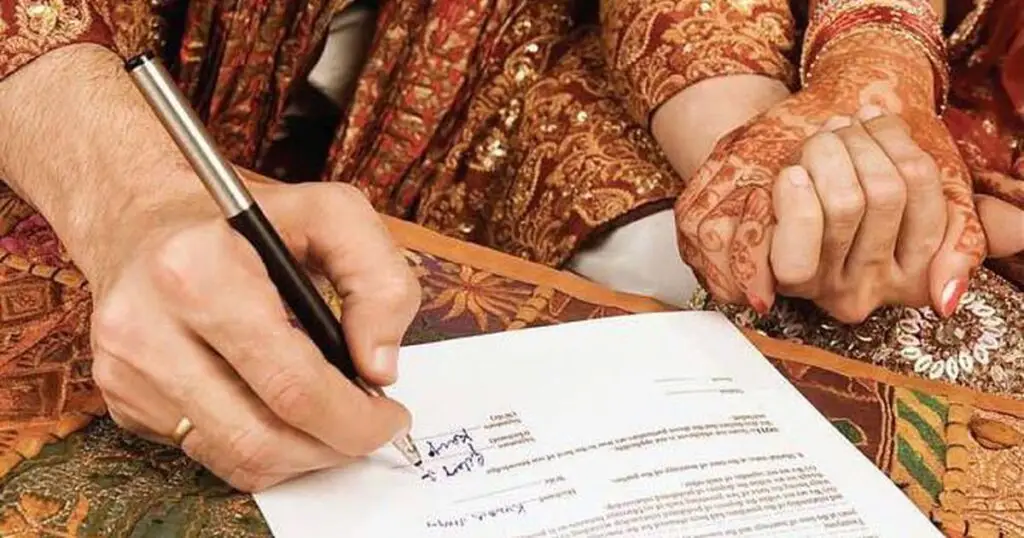
In a country as diverse as India, where culture, religion, and tradition often intertwine with law, the Special Marriage Act (SMA), 1954 stands out as a progressive piece of legislation. It offers a secular route to marriage — free from religious customs and personal laws — allowing two individuals from different backgrounds to legally unite.Whether you’re in an interfaith relationship or simply want to avoid religious ceremonies, this act might be the path you’re looking for. Let’s dive into what it is, how it works, and why it matters. What does Special Marriage Act Mean?Basically SMA is a central law in India that allows two people to marry regardless of their religion, caste, or creed. It was enacted to provide a civil marriage option to couples who don’t want to marry under personal laws like Hindu, Muslim, or Christian laws.This act applies to:Citizens of India, irrespective of religionIndian nationals living abroadInter-caste or interfaith couplesCouples wanting a simple, court-registered marriage Key Features of the ActSecular Nature: The SMA is not based on any religion. It focuses solely on legal consent and eligibility.Notice Period: Couples must give a 30-day public notice at the Marriage Registrar’s office before the marriage can take place.Objection Clause: During this 30-day period, objections can be raised. If none are found valid, the marriage can proceed.Registration: The marriage is solemnized in front of the Marriage Officer and three witnesses, and a marriage certificate is issued.Legal Rights: The married couple gets legal rights such as inheritance, alimony, and divorce under secular civil law. Eligibility CriteriaTo get married under the Special Marriage Act:Both parties must be at least 21 years old (for men) and 18 years old (for women)Neither party should have a living spouseBoth must be mentally soundThe couple should not fall within prohibited degrees of relationship (e.g., close blood relatives) Step-by-Step ProcessFiling the Notice: Submit a notice of intended marriage to the Marriage Registrar in the district where either partner has resided for at least 30 days.Waiting Period: Wait for 30 days to allow any objections.Objection Handling (if any): If objections are raised, they are investigated. If none or found invalid, the process continues.Marriage Solemnization: After 30 days, the couple can get married in front of a Marriage Officer and three witnesses.Certificate Issuance: A legal marriage certificate is issued, which is proof of marriage. Divorce and Legal SeparationMarriages under SMA are governed by civil laws, not religious laws. If the relationship breaks down, divorce and separation are dealt with through Chapter V of the SMA, which covers:Mutual consent divorceContested divorceGrounds like cruelty, adultery, desertion, etc. Why It Matters TodayIn a time when interfaith and intercaste relationships are still met with social resistance in many parts of India, the Special Marriage Act:Protects individual freedomProvides a legal shield to interfaith couplesEnsures that religion does not interfere with the right to marryHowever, the public notice requirement has been criticized for exposing couples to harassment. There have been calls to amend this clause to protect privacy, especially in sensitive cases. ConclusionThe Special Marriage Act is more than just a legal provision — it’s a reflection of India’s secular spirit. While challenges remain, the SMA empowers individuals to choose love over labels, lawfully and fearlessly.Whether you’re planning your own wedding or just curious about the legal framework of love in India, understanding the Special Marriage Act is a step toward an inclusive society that respects choice and celebrates unity.

Scroll to Top