
- The Digital Pulse Of Casino Evolution
- Tech Beats And Immersive Play
- Interface That Feels Alive
- Slots And The New Era Of Digital Design
- Payments, Trust, And The Human Touch
- Community And Rhythm Of Interaction
- Security As A Background Beat
- AI Dealers And Predictive Design
- The Future Pulse Of Online Casinos
- Conclusion
The Digital Pulse Of Casino Evolution
There’s a quiet soundtrack behind every click on an online casino page. It’s not really sound, but rhythm, a kind of pattern that carries players from one screen to the next. The phrase “digital rhythm” might sound abstract, but it feels entirely tangible when you enter a platform that’s perfectly tuned to how humans browse, bet, and react. It’s that seamless alternation of anticipation and reward that keeps casinos evolving.
I think the charm lies in how familiar it feels and yet how advanced it’s become. Consider the Plinko Game—a simple idea reimagined for an online world that craves immediacy. No complicated rules, just rhythm, movement, and uncertainty rendered through digital polish. You drop a ball, and gravity does the rest, guided somehow by code and chance. That’s today’s casino spirit: a union of old physics and new algorithms.
Tech Beats And Immersive Play
Technology in online gambling isn’t just a toolkit anymore. It’s the metronome setting the pace. Years ago, a website with static reels was enough to engage players, but now everything is synced, even subtly. Interfaces respond faster than a thought. Lights, sounds, and feedback loops combine to simulate a kind of rhythmical engagement that doesn’t feel mechanical.
There’s something hypnotic in this synchronization. When I watch a reel spin, or even a card flip, there’s that half-second where motion meets expectation. The tempo matters. Some platforms even use delayed animations not for decoration, but as pacing tools. That’s a small secret of digital rhythm: anticipation is engineered, curated almost artistically. true—and it works.

Interface That Feels Alive
The interface is where rhythm becomes experience. You could argue that the flow of a casino page has more in common with a piece of music than with static design. Buttons pulse subtly when hovered over. Banners appear in sync with user behavior. The process of registering or claiming a bonus—even something simple like spinning a slot—feels guided by an invisible tempo.
Many modern platforms choose minimalistic layouts, focusing on dynamics instead of decoration. The homepage might open quietly, almost reserved, then gradually pick up energy as the player scrolls. That crescendo mirrors human curiosity. You’re invited to explore rather than thrown into chaos.
Slots And The New Era Of Digital Design
Slots are, in many ways, the heartbeat of any online casino. They’ve transitioned from simple three-reel bands to creative ecosystems where storytelling intertwines with chance. The rhythm here isn’t just in animation speed; it’s in how the game communicates victories and near misses. Every sound, every light flash is choreographed. The aim is not manipulation—it’s immersion.
Developers now use dynamic animation layering to adjust rhythm on the fly. If a player fails several rounds, the motion may slow just slightly to reduce fatigue. When they win, everything speeds up. This adaptation keeps engagement consistent but not overwhelming. It’s not coincidence that the best-performing slots have a musical cadence embedded in their design.
Payments, Trust, And The Human Touch
It might sound contradictory, but payments too have a rhythm. The perfect online casino, whether through card systems or cryptocurrency, doesn’t make you think twice about withdrawals or deposits. The transitions are smooth, transparent, almost natural. In a sense, the good platforms make digital money feel tactile.
I once noticed how the waiting time during a transaction contributes to trust. If it’s too quick, oddly, you might doubt its legitimacy. If it’s too slow, you lose patience. So, operators tune that waiting period, matching players’ expectations almost like a rhythm section that keeps everything in sync. Behind every QR scan or confirmation click is a tempo designed for psychological comfort. It’s fascinating, really.
Community And Rhythm Of Interaction
Casinos have always been social spaces, and online versions try to replicate that pulse. Community features, from lobbies to chat rooms, allow players to ride the same emotional waves together. The rhythm there isn’t coded but human—the natural back-and-forth between competition and camaraderie.
Modern platforms are also experimenting with social APIs that connect streaming and real-time reactions. Imagine cheering with hundreds during a jackpot win, even though you’re sitting alone at home. That crowd rhythm, digital yet genuine, becomes the casino’s heartbeat.
- Instant chat reactions that sync with game outcomes
- Moderated lobbies with music-driven mood adjustments
- Dynamic visuals that match the energy of community wins
These elements don’t just fill space—they create rhythm loops between users. Every expression, every response amplifies engagement and builds collective excitement. That’s not something to overlook; it’s human emotion transformed into code.
Security As A Background Beat
If rhythm defines how we play, security defines how we stay. Nobody wants to think about encryption while spinning a reel, but the best experiences weave safety quietly into the background. You never see it, yet you feel it in how consistently stable everything runs. The moment a site feels offbeat—maybe a lag, or login error—that rhythm is disrupted, and trust falters.
SSL certificates, blockchain validation, two-step authentication: all these components work silently. The player might not notice them, but subconsciously, they anchor confidence. I like comparing it to the bassline in a song—you don’t hum it, but it holds everything together.
AI Dealers And Predictive Design
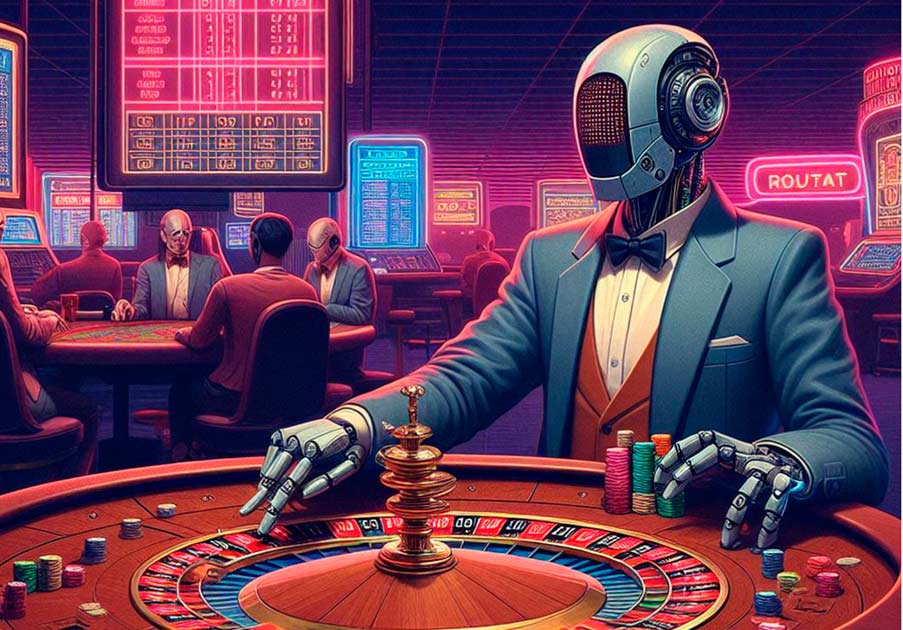
The next casinos are getting smarter, perhaps a little uncannily so. Artificial intelligence is transforming interfaces into adaptive environments. An AI dealer doesn’t just shuffle cards—it reads pacing, recognizes hesitation, and mirrors conversational tone. Some would say it’s nearly human, though perhaps a touch too perfect at times.
What’s interesting is how predictive design enters play too. The system might subtly change interface elements based on past choices, faster reaction times, or even time of day. Early tests show that adjusting background motion speed during night sessions keeps players relaxed for longer. It’s fine-tuning at the psychological level, the digital version of adjusting rhythm at a concert to suit the crowd.
The Future Pulse Of Online Casinos
The future feels both dazzling and uncertain. On one hand, emerging technologies like augmented reality will drag rhythm even deeper into sensory territory. On the other, regulation keeps trying to find its pace within this dizzying evolution. But, if there’s one constant I sense, it’s that online casinos will become more organic—with rhythm seamlessly connecting emotion and algorithm.
Maybe one day we won’t even distinguish between playing and feeling. Casinos will turn into live, responsive spaces that shift tone and pace instantly. It could sound far-fetched, but then again, playing cards on a phone once did too.
Conclusion
To summarize, the rhythm that carries online casinos into tomorrow isn’t metaphorical anymore—it’s tangible and designed. From slots to payment gateways, everything now follows a human tempo. Perhaps that’s the real measure of progress: not graphics or jackpots, but how naturally the experience flows from one moment to the next.
Every new platform, every responsive animation, echo a simple pursuit—to make digital gambling feel alive, emotionally paced, and instinctively satisfying. In a world powered by code, rhythm has become the most human feature of all, a quiet pulse guiding us through the thrill of uncertain outcomes and illuminated screens. And I suppose, that’s what keeps us coming back—one beat at a time.